


Is Your Child Ready for the School Year?
As the school year approaches, many parents are preparing for new teachers, new routines, and the excitement of a fresh start. But for some families, back-to-school also brings a lingering question:
Is this normal, or is my child struggling?
Maybe your child has become increasingly anxious about returning to school. Perhaps they struggled socially or academically last spring and never regained their confidence over the summer. Or maybe you’ve noticed more emotional outbursts, withdrawal, or irritability that leaves you wondering whether this is simply a phase—or something more.
You’re not alone.
The transition back to school often brings underlying mental health concerns to the surface. New routines, academic expectations, and shifting friendships can make emotional or behavioral challenges more visible than they were during the summer months. While some nervousness is expected, persistent emotional or behavioral changes that interfere with everyday life deserve attention.
In fact, according to the Centers for Disease Control and Prevention (CDC), nearly 1 in 5 children ages 3–17 in the United States have experienced a mental, emotional, or behavioral condition. Yet many families wait months—or even years—to seek support because they aren’t sure whether what they’re seeing warrants professional help.
At Aris Clinic, we’ve spent more than 15 years helping children, teens, and families navigate these questions. Early intervention isn’t about expecting the worst—it’s about recognizing concerns early so your child can receive the right support at the right time, before challenges begin affecting school, relationships, and everyday life.
As you read through the warning signs below, keep these three things in mind:
- Look for patterns that persist. Occasional struggles are normal, but emotional or behavioral changes that continue for several weeks and begin affecting daily life deserve attention.
- Consider the impact. Are concerns interfering with school, friendships, family relationships, or activities your child once enjoyed?
- Remember that early support creates more options. Seeking help doesn’t commit your family to a specific treatment program. It simply provides the opportunity to better understand what’s happening and determine the most appropriate next step.
Warning Signs in Children Ages 8–12
Younger children rarely tell their parents, “I’m struggling.” More often, you’ll notice subtle changes in their emotions, behavior, or daily routines. As children return to school, these signs often become more apparent as they adjust to new classroom expectations, routines, and social situations.
The important question isn’t whether your child shows one of these signs occasionally. It’s whether you’re noticing a consistent pattern that is beginning to affect everyday life.

Emotional and Behavioral Signs
- Persistent worry, fear, or anxiety that doesn’t improve with reassurance
- Frequent irritability, angry outbursts, or emotional meltdowns that seem out of proportion to the situation
- Ongoing sadness, tearfulness, or noticeable mood changes
- Refusing to go to school or expressing intense fear or dread about attending
- Difficulty concentrating, completing schoolwork, or a sudden decline in academic performance
- Withdrawing from friends, family, or activities they previously enjoyed
Physical and Social Signs
- Frequent headaches or stomachaches with no clear medical cause (these can be physical signs of anxiety)
- Changes in sleep patterns, including difficulty falling asleep, nightmares, or sleeping significantly more than usual
- Changes in appetite or eating habits
- Difficulty maintaining friendships or increasing social isolation
- Reactions to bullying, grief, family changes, or other stressful events that continue to intensify instead of gradually improving
When emotional or behavioral challenges interfere with your child’s ability to learn, build relationships, or enjoy activities they once loved, it’s worth having a conversation with a mental health professional. At Aris Clinic, these are exactly the kinds of struggles we see in younger children who come through our program, and the earlier families reach out, the more options there are.
Warning Signs in Teens Ages 13–18
Adolescence naturally brings greater independence, changing emotions, and a desire for privacy. That can make it difficult for parents to know whether they’re seeing typical teenage behavior or signs of a deeper mental health concern.
As the school year begins, increased academic expectations, social pressures, extracurricular commitments, and planning for the future can make underlying struggles more apparent. Rather than focusing on one isolated incident, pay attention to meaningful changes in your teen’s typical behavior that continue over time.

The National Institute of Mental Health (NIMH) notes that warning signs become more concerning when they represent a significant change from baseline and persist over weeks or months.
Mood and Emotional Signs
- Persistent sadness, hopelessness, or a belief that things won’t get better
- Increased emotional reactivity, including frequent arguments, crying, or emotional numbness
- Expressing feelings of worthlessness or talking about not wanting to be here
Behavioral and Social Signs
- Pulling away from family, close friends, or activities they once enjoyed
- Declining grades, skipping school, or a noticeable loss of motivation
- Escalating conflict at home that goes beyond typical disagreements
- Increased secrecy, particularly regarding phone use, social media, or where they’re spending time
Warning Signs That Require Immediate Attention
Some behaviors should never be dismissed as “just being a teenager.” If your child or teen is experiencing any of the following, seek professional support as soon as possible:
- Talking about or engaging in self-harm or cutting
- Expressing suicidal thoughts or making statements about not wanting to live
- Using alcohol or drugs to cope with emotional distress
- Compulsive technology or gaming use that replaces school, relationships, or other responsibilities
Teens don’t always ask for help directly. More often, they communicate through changes in their behavior, relationships, school performance, or daily routines. Trust your instincts. If something feels different and those changes continue over time, it’s worth starting a conversation with a mental health professional.
When Your Child May Need More Support
Recognizing that your child may need additional support can feel overwhelming. Many parents wonder whether weekly therapy is enough, whether a more structured program is needed, or whether they’re overreacting altogether. The reality is that every child is different, and the level of care should reflect their individual needs.
For many children and teens, individual outpatient therapy is an excellent starting point. Weekly sessions can build coping skills, improve communication, and help young people work through life’s challenges. However, if symptoms continue to worsen, begin interfering with school or family life, or progress has stalled despite ongoing therapy, a more structured level of care may be appropriate.
As explained on our Levels of Care page, an Intensive Outpatient Program (IOP) can serve as a step up from weekly outpatient therapy when symptoms are escalating, or as a step down after inpatient care as a child transitions back to everyday life. Needing additional support isn’t a failure—it’s about matching the level of care to your child’s needs so they can make meaningful progress.
The comparison below provides a general overview of when outpatient therapy or an Intensive Outpatient Program may be the better fit.
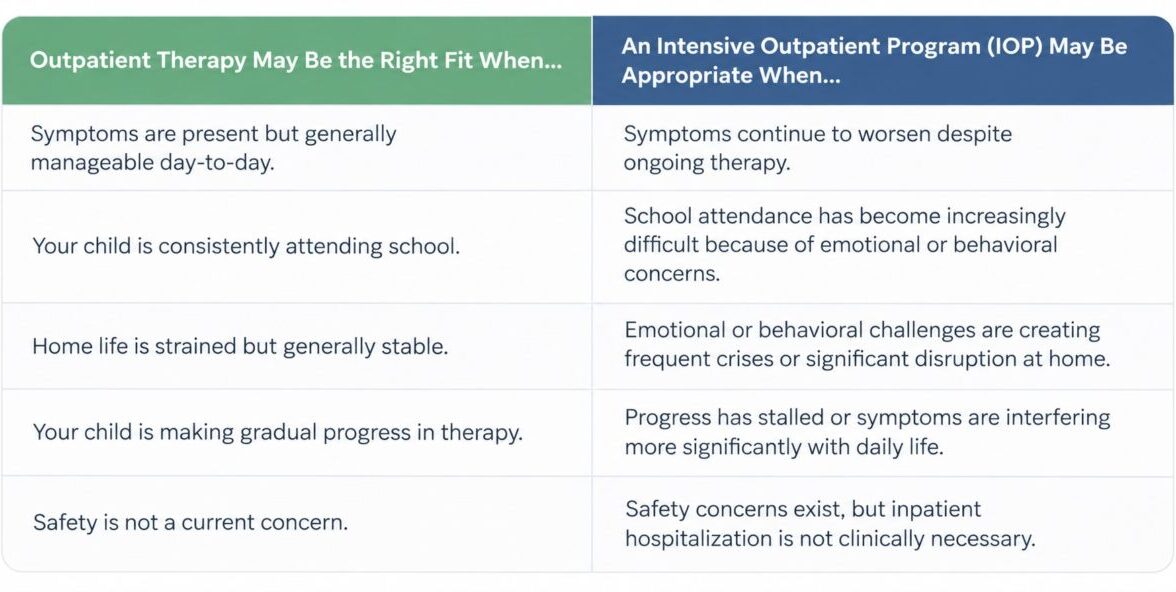
Rather than trying to determine the right level of care on your own, an assessment with a mental health professional can help identify the approach that best meets your child’s individual needs and provide guidance on the most appropriate next step.
What Families Can Expect at Aris Clinic’s Intensive Outpatient Program
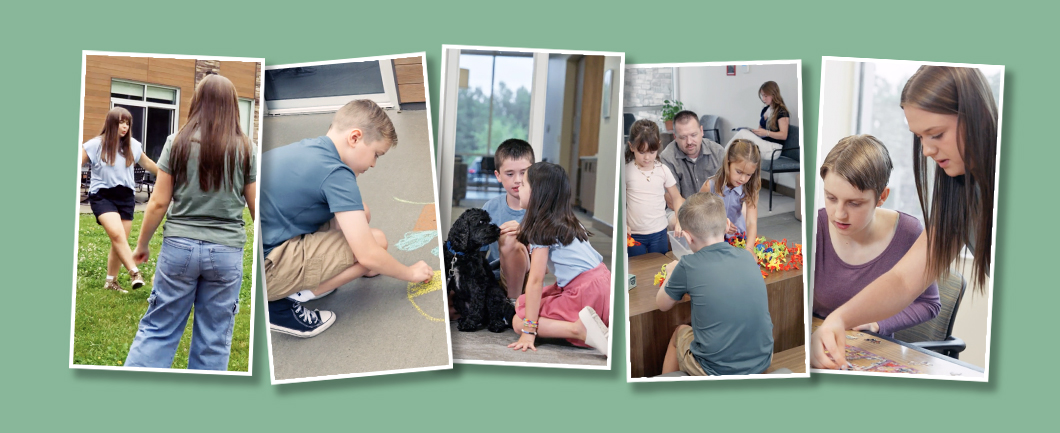
For children and teens who need more support than weekly outpatient therapy can provide, Aris Clinic’s Intensive Outpatient Program (IOP) offers a structured, in-person treatment option for ages 8–18. Located in Woodbury, the program serves families throughout the Twin Cities metro area and western Wisconsin.
For more than 15 years, our IOP has helped children, teens, and families navigate emotional and behavioral challenges with compassionate, evidence-based care. Overseen by Shalene Kennedy, MD, and Chad Cartier, Director of Psychotherapy, the program is designed to help children stabilize, build healthy coping skills, and return to everyday life with greater confidence and support.
Program Highlights
- Five days per week, typically lasting 8–12 weeks based on each child’s individual needs
- Three hours of group therapy each day, with groups limited to eight participants to encourage meaningful participation and connection
- Psychiatry appointments three to five times per week, including medication management when clinically appropriate
- Weekly family therapy sessions that actively involve parents and caregivers throughout treatment
- Age-based groups so children and teens receive care alongside peers in similar developmental stages
Supporting Success at School
One of the biggest concerns parents have is whether seeking treatment will cause their child to fall behind academically. At Aris Clinic, treatment and education work together—not in competition.
During the school year, students receive educational programming through Minnesota’s Northeast Metro District 916, allowing them to continue making academic progress while receiving the mental health support they need. This integrated approach helps ease the transition back to school and gives families confidence that both their child’s emotional well-being and educational needs are being addressed.
Focused on Helping Children Move Forward
The Intensive Outpatient Program is not intended to be a long-term placement. Its purpose is to provide the structure and support children and teens need to regain stability, strengthen healthy coping skills, and successfully transition back to everyday life.
Historically, 90% of participants in Aris Clinic’s IOP discharge to outpatient care and return to school in an average of eight weeks.
For families, that means more than returning to school. It means helping children regain confidence, reconnect with friends and family, develop healthy coping strategies, and continue moving forward with the support they need to succeed.
To learn more, explore Aris Clinic’s Intensive Outpatient Program or review our Levels of Care page to better understand the treatment options available.

Ready to Take the Next Step?
If you’ve recognized several of the warning signs throughout this article, you don’t need to have all the answers before reaching out for help.
Many of the families who contact Aris Clinic are in exactly the same place you may be today. They’ve noticed changes in their child’s emotions or behavior, they’re unsure whether those changes are part of normal development or something more, and they simply want guidance from experienced mental health professionals.
That’s exactly where an assessment can help.
An assessment provides the opportunity to better understand your child’s needs, discuss available treatment options, and determine the most appropriate next step. In some cases, that may be weekly outpatient therapy. In others, a more structured program such as an Intensive Outpatient Program may provide the additional support needed.
You don’t have to figure everything out before asking for help. Sometimes the first step is simply gaining clarity and understanding your options.
Aris Clinic serves children and teens ages 8–18 throughout the Twin Cities metro area and western Wisconsin. Whether you’re looking for a starting point, wondering if your child may benefit from an Intensive Outpatient Program, or simply need guidance on where to begin, our team is here to help.
Contact Aris Clinic today to request an assessment or speak with a member of our team. There’s no pressure and no commitment required to ask questions—we’re here to help you determine the right path forward for your child and your family.
